
Understanding the significance of the biocompatibility journey and why it’s essential for US FDA Approval
Earlier this week, Ocumetics sent out a press release announcing that we completed our three-month biocompatibility study and received very favorable results. Receiving favorable results in this study is a critical aspect in the field of health care and medical device development.
This significant milestone refers to the ability of a material or, in our case, a device, to perform its intended function without causing harm to the biological system it interacts with. This concept ensures that the device or material is compatible with living tissues, cells, and the human body, without triggering adverse reactions.
The US Food and Drug Administration (FDA) regulates medical devices and ensures that they are safe and effective for their intended use. Biocompatibility assessments are a crucial part of their evaluation process for medical devices. Manufacturers must demonstrate that their devices are biocompatible and meet specific standards and regulations set by the FDA.
The FDA requires comprehensive testing and documentation to establish the safety of the device regarding its interactions with the human body. This includes assessing the device’s materials, design, and potential risks associated with its use. Satisfactory evidence of biocompatibility is required to obtain FDA approval for a medical device.
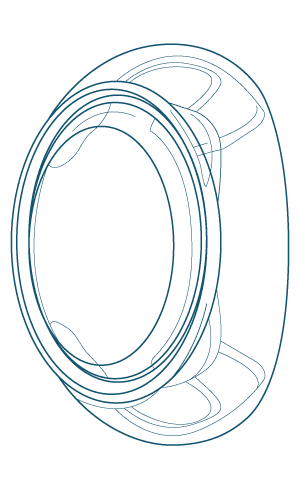
Ocumetics has now obtained the required evidence of biocompatibility for the Ocumetics Accommodating Lens and can now take the next step in the clinical trial process, with the goal of obtaining FDA approval.
Receiving FDA approval is a vital step for medical devices to enter the market and reach patients. It signifies that the device has undergone rigorous evaluations, including the biocompatibility assessments that ensure its safety and efficacy. This approval not only validates the quality of the device, but also instills confidence in health-care providers and patients regarding its use.
With our positive results in hand, our next step is to submit an Investigational Device Exemption (IDE) application to the FDA. This application will outline our proposed clinical trial plan for the Ocumetics Accommodating Lens and provides a comprehensive overview of our design and intended use. We expect to have this application completed in the next few weeks.
Once we are granted an IDE, we will commence clinical trials on human subjects and we expect this process to begin in Q1 2024 in the Dominican Republic.
As always, the above is a high-level overview of the process. We are available to provide more detail at any time. Please contact me at dean.burns@ocumetics.com with any questions.
Key Highlights Group Two clinical study underway – Patient recruitment has begun in Mexico City, with surgeries targeted for Fall 2026. Moving beyond safety – The Group Two study will evaluate the Ocumetics Lens for safety plus near-and distance-vision performance. Next-generation technology – Patients will receive the latest-generation Ocumetics Lens implanted with an enhanced delivery system. 12-month data milestone approaching – Group One patients are
Calgary, Alberta – TheNewswire – August 24, 2026 – Ocumetics Technology Corp. (“Ocumetics” or the “Corporation”) (TSXV: OTC) (OTCQB: OTCFF) (FRA: 2QBO) announces that it has completed the third and final tranche of the private placement previously announced by the Corporation on July 7, July 29, July 30, 2026 and July 31, 2026 (the “Offering”). The Corporation
Key Highlights Precision molds received for manufacturing of new optimized accommodating intraocular lenses Production and testing of next-generation lenses now underway New lens design incorporates insights from Group One First-in-Human study Group Two preclinical surgeries targeted for early Q3 2026 FDA Investigational Device Exemption (IDE) preparation advancing Calgary, Canada – TheNewswire – May 12, 2026
Calgary, Alberta – TheNewswire – April 29, 2026 – Ocumetics Technology Corp. (“Ocumetics” or the “Corporation”) (TSXV: OTC) (OTCQB: OTCFF) (FRA: 2QBO) announces that it proposes to complete a private placement (the “Offering”) of up to 2,800,000 units of the Corporation (“Units”) at a price of $0.55 per Unit for gross proceeds of up to